LED Floor Tiles Full Guide
LED Floor Tiles Full Guide
February 8, 2026 / By NSE LED
LED floor tiles have moved far beyond novelty displays. Today, they play a strategic role in retail, exhibitions, entertainment venues, and immersive digital spaces.
Many buyers struggle to understand how LED floor tiles actually work, where they make sense, and how they compare with alternatives like glass floors or projection systems.
This guide explains what LED floor tiles are, how they are used, how different solutions compare, and what problems you should anticipate, so you can make informed decisions for real-world projects.
Detailed view of transparent LED floor tiles showcasing the glass surface, LED arrangement, internal power supply, and installation components.

Table of Contents
Part 1. What Are LED Floor Tiles? Part 2. Applications of LED Floor Tiles Common Commercial Applications Event and Entertainment Scenarios Part 3. LED Glass Floor Tiles vs. LED Floor Tiles Part 4. Interactive LED Floor Tiles vs. Projectors Core Differences Part 5. Common Problems of Using LED Floor Tiles 1. Insufficient Load Rating 2. Slippery Surface Treatments 3. Heat and Ventilation Issues 4. Content Not Designed for Floors 5. Maintenance Access Limitations
Part 2. Applications of LED Floor Tiles
Common Commercial Applications Event and Entertainment Scenarios
Part 5. Common Problems of Using LED Floor Tiles
1. Insufficient Load Rating 2. Slippery Surface Treatments 3. Heat and Ventilation Issues 4. Content Not Designed for Floors 5. Maintenance Access Limitations
Part 1. What Are LED Floor Tiles?
LED floor tiles are load-bearing LED display panels designed for people to walk, stand, or perform on directly.
Unlike standard LED screens, these panels integrate reinforced structures, anti-slip surfaces, and pressure resistance while maintaining visual performance.
At their core, LED floor tiles combine:
- High-strength tempered glass or polymer surfaces
- Reinforced aluminum or steel cabinets
- LED modules optimized for close viewing
- Sensors or software systems for interaction
Most commercial LED floor tiles support static loads between 500 kg and 2,000 kg per square meter, depending on design and certification.
According to industry data from AVIXA, floor-mounted LED displays are one of the fastest-growing segments in experiential AV installations due to demand for immersive engagement.
Part 2. Applications of LED Floor Tiles
LED floor tiles succeed where interaction, immersion, and durability matter more than pure resolution.
Common Commercial Applications
Retail flagship stores and brand experience centers
• Trade shows and exhibition halls
• Nightclubs, concerts, and performance stages
• Museums, science centers, and immersive art spaces
• Corporate showrooms and innovation labs
In retail, interactive LED floors increase dwell time by 20–30%, according to experiential marketing studies published by Retail TouchPoints
Event and Entertainment Scenarios
Dance floors for concerts and weddings
• Immersive storytelling environments
• Sports fan zones and esports venues
LED floor tiles allow content to respond dynamically to movement, sound, or lighting, creating memorable experiences that static floors cannot match.
Part 3. LED Glass Floor Tiles vs. LED Floor Tiles
Many buyers confuse LED glass floors with true LED floor tiles. The distinction matters for safety, longevity, and maintenance.
Below is a practical comparison.
LED Glass Floor
Medium
LED Floor Tiles
High
Surface
Transparent
Resistance
Moderate
Impact
High
Tile Maintenance
Complex
Application
Decorative
Cost Efficiency
Lower
Discover LED floor solutions
LED glass floors focus on visual aesthetics, often installed in low-traffic environments.
LED floor tiles prioritize structural integrity and safety, making them suitable for public and high-footfall spaces.
Comparison of transparent LED floor tile installations for walkable lighting and decorative flooring in interior environments.

LED Tiles vs. Projectors
Projectors are often cheaper, but behave differently.
Core Differences
Comparison
Interactive LED Floor Tiles vs Projection Systems.
Main Aspect
Interactive LED Floor Tiles
Brightness
High, consistent
Durability
Designed for foot traffic
Alignment
Fixed and precise
Interaction Accuracy
High
Lifespan
50,000–100,000 hours
Part 5. Common Problems of Using LED Floor Tiles
LED floor tiles deliver strong visual impact, but only when properly specified and installed.
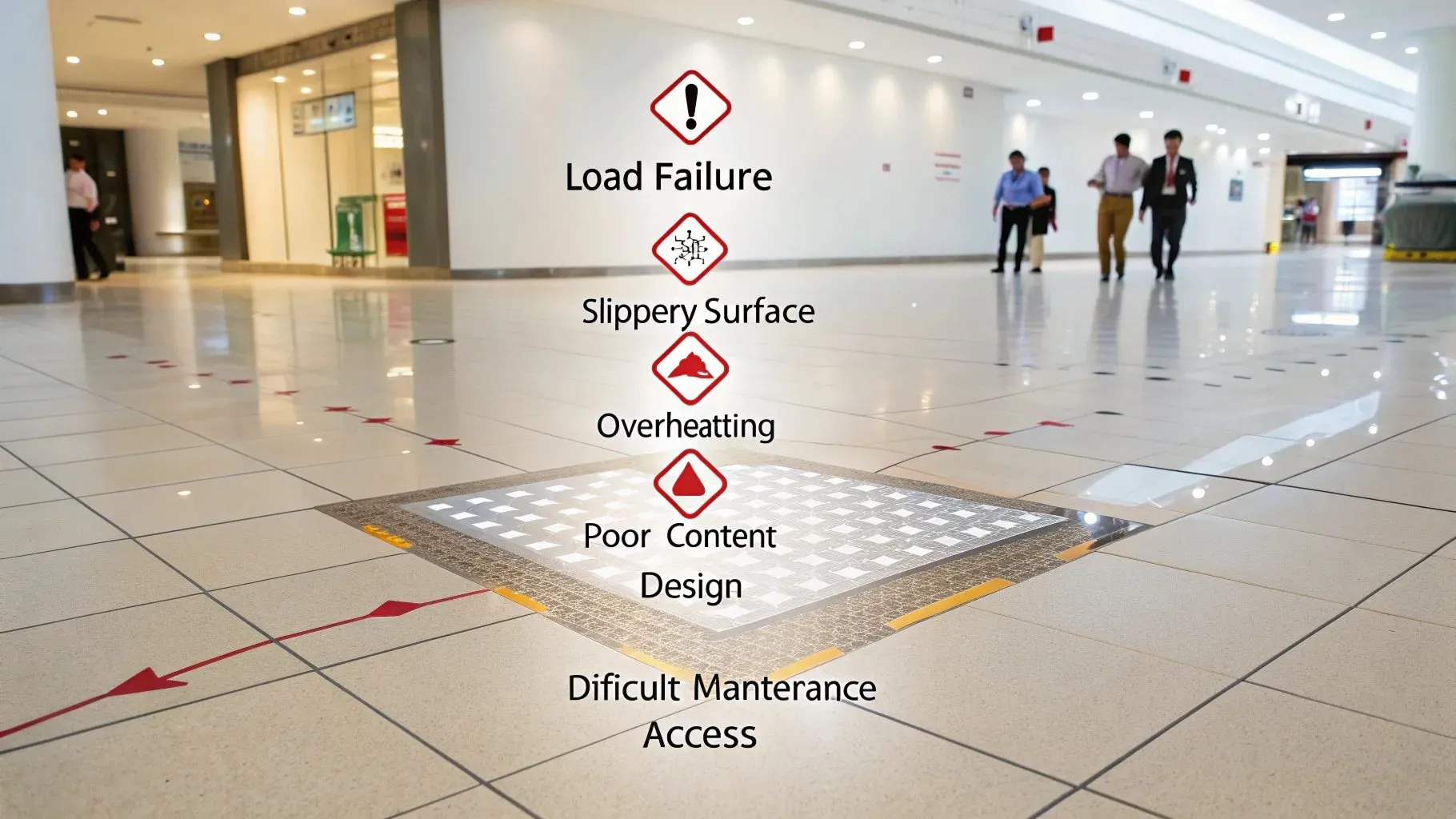
1. Insufficient Load Rating
Using panels without certified load capacity can lead to:
Cracked surfaces
• Dead pixels
• Structural failure
Always confirm static and dynamic load specifications before purchase.
2. Slippery Surface Treatments
Glossy finishes look attractive but become hazardous in public spaces.
Safety Compliance Factors
Anti-slip coatings and textured glass are essential for safety compliance.
Heat and Ventilation Notes
Poor thermal design shortens LED lifespan.
Quality System Elements
Efficient cabinet ventilation • Heat-dissipating materials • Smart power management
Content Design Challenges
Standard video content does not translate well to floor displays.
Successful Project Components
Motion-responsive visuals • Perspective-aware graphics • Real-time interaction engines
Maintenance Access Points
Ignoring this detail increases downtime and service costs.
Visual list of risks associated with LED floor tiles: structural failure, surface hazards, and maintenance limitations in high-traffic environments.
Part 6. Conclusion
LED floor tiles are not just displays—they are interactive architectural elements that merge technology with physical space.
When chosen correctly, they deliver durability, immersion, and engagement that alternatives cannot match. However, success depends on understanding structure, load capacity, interaction design, and long-term maintenance.
For commercial buyers, the key is not chasing visual novelty, but aligning application requirements with certified, purpose-built LED floor tile systems
At NSELED, we design and manufacture professional LED display solutions for global B2B projects, including durable LED floor tiles customized for retail, exhibitions, and entertainment environments. If you are planning an immersive floor display, our team can help you evaluate the right solution for performance, safety, and ROI.
Related Posts